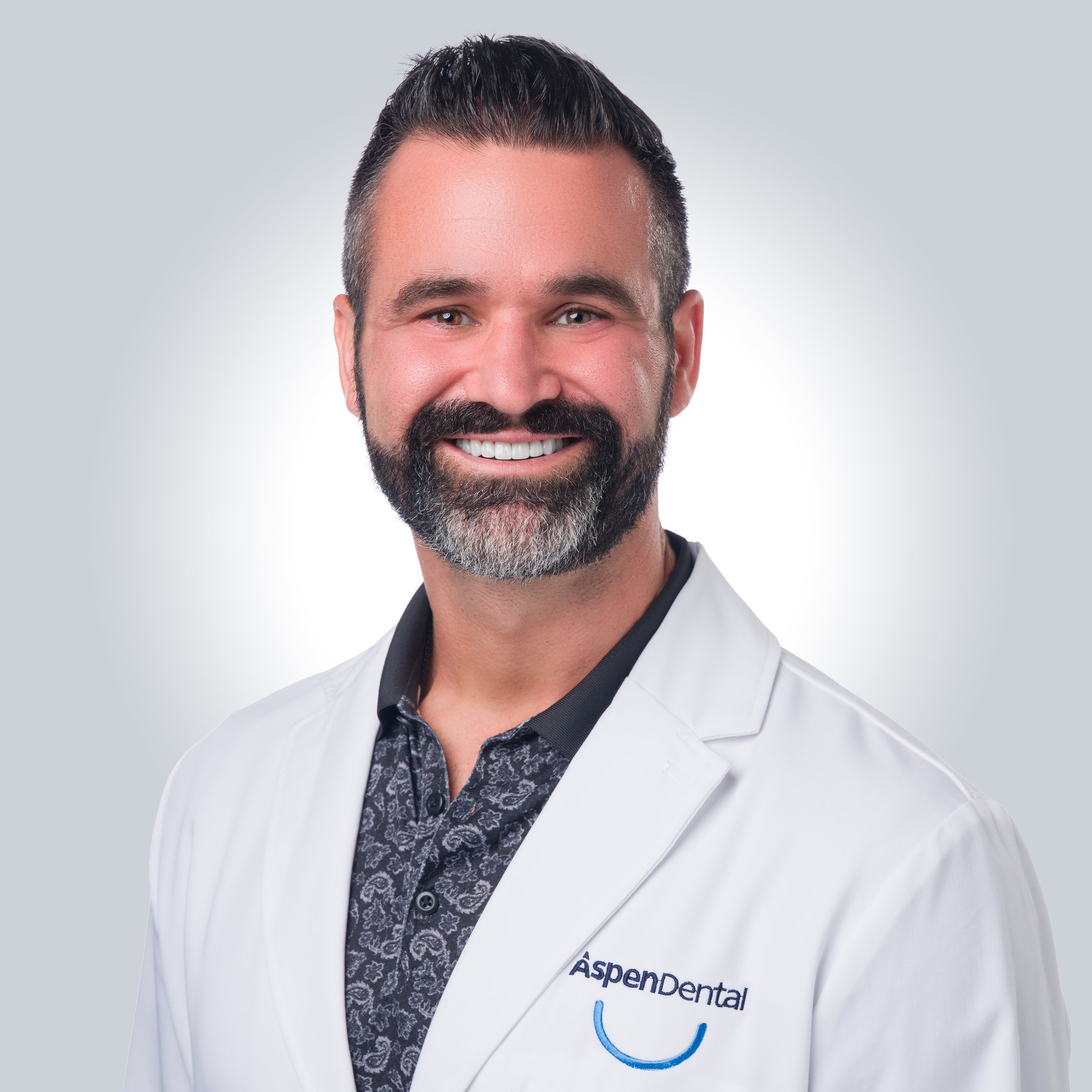
Dr. Spencer Rogers
Owner & Dentist, DDS/DMD
Aspen Dental — Boise, ID
“Care is closer than you think. Easy to get to, easy to understand, and built around what you need to make a confident decision about your dental health.”
I'm Dr. Spencer Rogers — dentist and owner at the Aspen Dental office on Overland Road in Boise. I'm a graduate of Case Western Reserve University School of Dental Medicine, and my whole approach is education first: I'd rather you understand what's happening in your mouth and choose from real options than be talked into anything.
Not to be confused with Mr. Rogers — though I'll take the comparison. Crowns and oral surgery are my favorite procedures, because they're where precision, planning, and a steady chairside approach matter most. I want every patient to understand what we're doing and why, so you leave with confidence in your care.
How I help clients
- Cleanings & checkups
- Fillings & crowns
- Root canals
- Implants & tooth replacement
- Dentures
- Motto clear aligners
- Emergency & walk-in care
- Cosmetic dentistry
Products I place
Industries I serve
Specialties

However you found this card — from our front desk, a text, or a friend — everything you need is one tap away: book a visit, ask a question, or save my info for the day something hurts. At participating offices, new patients without insurance can ask about our $29 exam & X-rays offer, and we often run 20% off dentures and implants at select locations.
PURPOSE
Who I help & how I do it
My goal is simple: give you clear, honest information and care you can feel confident about. Every visit starts with listening, includes a full exam, and ends with a written plan so you know exactly where you stand.
Who I help
New patients
Whether you're switching dentists or haven't had one in a while, we'll get you oriented with a thorough exam, X-rays, and an easy-to-understand plan.
Families & busy schedules
Early 7:00a weekday starts and multiple services in one visit so you're not taking multiple afternoons off work or school.
People who want options
I'll show you what's happening, explain the choices, and help you pick the approach that fits your health goals and budget.
People in pain right now
Broken tooth, swelling, or a throbbing ache — call. We handle urgent problems first and explain the next steps clearly.
What makes me different
Education first
You'll see your own X-rays and hear what each option costs, protects, and risks before you decide.
Calm, patient chairside
Patients tell me I'm steady and easy to talk to. I take time to explain and answer questions so you leave with confidence.
Skilled where it counts
Crowns and surgery are my favorite procedures — the ones where steady hands and careful planning matter most.
Real choices
There's almost always more than one right answer, including waiting. I'll tell you when waiting is safe and when it isn't.
How I do it
Tell us what's going on
Book online by visit type or call. If you're in pain, say so — that changes how we schedule you.
Exam & X-rays
We review your medical and dental history, take images if needed, and do a full exam including a cancer screening.
Talk through options
We look at the images together, I explain what I see, and you get a written plan with costs and insurance applied.
Treat at your pace
Urgent things first, then the rest in whatever order and timeline works for your life and budget.
You don't need to know exactly what you need before you walk in. The first visit is for figuring that out together.
Credentials
Licensed & experienced
Aspen Dental offices are dentist-owned and dentist-led. This one is mine, which means the person recommending your treatment is the person who performs it and sees you at your follow-up.
1
Years in the business
DDS/DMD, licensed dentist practicing in Boise, Idaho
Owner-dentist at Aspen Dental, 8321 W. Overland Rd.
By the numbers
- 7:00aWeekday openings start early, Mon-Fri
- Same dayEmergency and walk-in visits when slots allow
- WrittenCost estimate before any treatment begins
The path here
School
Graduated from Case Western Reserve University School of Dental Medicine.
Focus
Built a practice style around education first — options explained, questions welcomed, no pressure.
Skills
Favorite procedures are crowns and oral surgery, where technical precision and a calm chair matter most.
July 2025
Joined Aspen Dental and took ownership of the Boise office on Overland Road.
Today
Caring for patients from Boise, Garden City, Meridian, Eagle, Kuna, and across Ada County.
Education
DDS/DMD, Doctor of Dental Medicine
Case Western Reserve University School of Dental Medicine ·
Owner-dentist, Spencer Rogers DMD PLLC
Aspen Dental — Boise, Overland Rd. · 2025
Languages: Spanish & English
Care in the language you're most comfortable in ·
Designations & affiliations
Doctor of Dental Medicine, Case Western Reserve University School of Dental Medicine
Owner-dentist, Spencer Rogers DMD PLLC — Aspen Dental Boise
Bilingual care in Spanish and English
Continuing education in restorative and surgical dentistry, plus the modern imaging and lab technology Aspen Dental puts in every office — including on-site denture labs at many locations.
Beyond the office
Beyond the chair
The short version of the person behind the mask — because it's easier to trust someone you know a little.
My background
I trained at Case Western Reserve University School of Dental Medicine and joined Aspen Dental in July 2025 as the owner-dentist of the Boise office on Overland Road. Crowns and oral surgery are my favorite procedures: they let me combine technical precision with the part of this job I actually care about, which is making a stressful visit feel smooth.
- DDS/DMD, Case Western Reserve University School of Dental Medicine
- Owner-dentist, Spencer Rogers DMD PLLC
- With Aspen Dental since July 2025
- Bilingual: Spanish and English
- Focus areas: crowns, restorative care, and oral surgery
- Serving Boise, Meridian, Eagle, Kuna, Garden City, and Ada County
At home
I'm the cook in the house. Barbecue is the long project; homemade cast-iron pizza is the weeknight one. Ask me about dough hydration only if you have time.
Favorite things to do
- Motorcycle rides on Idaho backroads
- Working out — it's how I reset
- Barbecue, low and slow
- Cast-iron pizza night
- Anything outdoors around the Treasure Valley
What I care about at work
Patients who are afraid
A kindness-and-education approach: nothing happens before you understand it, and we stop whenever you need a break.
Access to care
Most major insurance accepted, plus financing and savings-plan options for people without coverage.
Bilingual care
Care in Spanish or English, so language is never the reason someone delays treatment.
Getting people out of pain
Emergency and same-day slots held open, because a broken tooth doesn't wait for a calendar.
What I believe about dentistry
If any of that sounds like the kind of dentist you've been looking for, come see us — start with an exam and we'll go from there.
Client reviews
What clients say
4.4 · 714 reviews
Reviews for our Boise office, in patients' own words. The theme we hear most: clear explanations, a patient approach, and a team that makes dental care feel manageable.
Featured patient story
“They explained everything before they did it, showed me the X-rays, and told me exactly what it would cost. That's all I wanted.”
Aspen Dental patient · Boise, ID
4.4
Average rating across 714 Boise reviews
Same day
Emergency visits when availability allows
99%
Approval rate for patients applying for in-office financing
“I had a broken tooth that hurt and had only roots left. I was amazed how nice and friendly everyone was. They managed to extract the roots without surgery and it was painless — I couldn't believe it.”
Verified patient · Boise, ID
“The staff were very caring and knowledgeable. They were informative and answered all my questions. I hate going to the dentist, but they put my fears at ease.”
Boise patient · Boise, ID
“First impression was a lasting impression, and it was all positive. Thank you for helping my wife with her teeth.”
Patient review · Boise, ID
“Everyone here is really nice and caring. I'll definitely recommend this office.”
Longtime patient · Boise, ID
Know someone avoiding the dentist?
If a friend or family member has been putting off a cleaning — or has a tooth they're worried about — send them this card. Reviews reflect individual experiences; your results and costs depend on your own exam.
My company
Aspen Dental
Company purpose
Care is closer than you think.
Aspen Dental is one of the largest dental support organizations in the country, built around a simple idea: the people who need care most — the anxious, the uninsured, the busy, the ones who've had a bad experience — deserve a dentist that's easy to reach and easy to understand. Every office is dentist-owned and dentist-led, with exams, X-rays, hygiene, fillings, crowns, root canals, oral surgery, implants, dentures, clear aligners, and emergency visits under one roof. Plus, you get a written estimate before treatment starts, so there are no surprises.
Products & services
Preventive care
Comprehensive exams, digital X-rays, oral cancer screening, cleanings, and gum disease treatment.
Restorative care
Tooth-colored fillings, crowns, bridges, root canals, and extractions.
Oral surgery
Simple and surgical extractions, wisdom teeth, and pre-implant procedures.
Implants & dentures
Single implants through full-arch, plus full, partial, implant-supported, and replacement dentures with repairs and relines.
Cosmetic & Motto aligners
Professional whitening, bonding, veneers, and doctor-supervised Motto clear aligners.
Emergency dentistry
Broken teeth, lost fillings, swelling, and severe pain — same-day and walk-in when availability allows.
What makes us different
Most major insurance accepted
We take a wide variety of dental plans and verify your benefits before treatment so you know your coverage up front. We do not accept Medicaid.
Options if you're uninsured
Third-party financing, flexible payment plans, and the Aspen Dental Savings Plan ($49/year — not insurance). About 99% of patients who apply for financing in the office are approved. Dentures start at $499 per arch for Savings Plan members.
Everything in one place
Cleanings, surgery, implants, dentures, aligners, and emergency care without being sent across town to multiple offices.
Costs before care
You get a written treatment plan with clear pricing, insurance applied, and time to decide. Nothing starts until you say yes.
New patient offers
At participating offices, new patients without insurance can get a $29 exam & X-rays. We also offer 20% off dentures and implants at select locations. Offers vary by office and may not be combined with insurance.
Peace of Mind Promise
First-class dentists, friendly judgment-free staff, and a promise to do right by you. We also back implants with a 25-year warranty and implant dentures with a 7-year warranty at participating offices.
Costs of inaction
- A small cavity becomes a root canal, then a crown — the same problem at five times the cost.
- Gum disease quietly destroys the bone that holds your teeth, and it doesn't grow back.
- A cracked tooth left alone often can't be saved by the time it hurts.
- Oral cancer and other conditions are usually found at a routine exam, not at home.
Benefits of working with us
Clarity
Your X-rays on the screen, explained in plain language, before any decision.
Predictability
A written estimate with insurance applied, so you're not surprised at checkout.
Access
Early weekday starts at 7:00a and same-day availability when we have it.
Comfort
Tell us you're anxious and we'll slow down, explain more, and take breaks.
Client portal
Your Aspen Dental patient resources
Guides on what to expect at your first visit, costs, insurance, and care instructions for every procedure we offer.
Open patient resourcesWarranty
How we work
My job is not to sell you dentistry. It's to show you what's happening, lay out the options — including doing nothing for now — and help you pick the one that fits your mouth, your schedule, and your budget. Aspen Dental backs that approach with a Peace of Mind Promise: first-class dentists, friendly judgment-free staff, and a commitment to do right by you.
Special offer
New patient visit
Your first visit includes a comprehensive exam, any needed X-rays, and a conversation about options and costs. At participating offices, new patients without insurance can ask about a $29 exam & X-rays. We also offer 20% off dentures and implants at select locations. Ask our team which offers apply to your visit.
Schedule a visitAspen Dental
Billing, insurance & payments
You should know what something costs before it happens. We verify your benefits, put the numbers in writing, and walk through the options with you before any treatment is scheduled.
Patient portalView statements, check balances, and manage your appointments online any time.Open the patient portalInsurance
- We accept most major dental insurance plans, and our team files the claim for you.
- We do not accept Medicaid at this office.
- Benefits are verified before treatment, so your estimate reflects your actual plan.
- Most plans cover preventive care at or near 100%, basic work around 80%, and major work around 50%.
- Annual maximums reset each year — if a plan year is ending, ask us how to sequence treatment.
Payment options
- Cash, check, and all major credit cards.
- HSA and FSA funds are accepted.
- Payment is due at the time of service for the patient portion shown on your estimate.
- The Aspen Dental Savings Plan is $49 a year for patients without insurance — a discount plan, not insurance.
Financing
- Third-party financing with monthly payments, applied for right here in the office.
- Most patients who apply in office are approved.
- Larger treatment can be phased so you handle the urgent part first.
- New patients without insurance can ask about the $29 exam and X-rays offer at participating offices.
If a number on your estimate doesn't make sense, ask. We'd much rather explain it twice than have you guess.
Connect
Book a visit
Pick the option that matches why you're coming in — it puts you with the right length of appointment and the right team.
Pick a visit type — swipe
Other ways in — swipe
Bring to your first visit
- Photo ID and your dental insurance card, if you have one
- A list of your current medications and medical conditions
- Any recent X-rays from a previous dentist
- Questions — write them down, they're easy to forget in the chair
Your first visit includes a comprehensive exam, any necessary X-rays, and a conversation about options and costs before anything is scheduled.
Connect
Contact the Office
Our team on Overland Road handles most things faster than I can between patients — start here:
- Scheduling, rescheduling, and same-day availability
- Insurance verification, estimates, and payment plans
- Records, X-rays, prescriptions, and post-visit questions
What to include
Have your insurance card handy if you have one, and let us know if you're in pain so we can triage the visit correctly.
Mon-Fri, 7:00a - 5:00p MT
Office locations
Meetings are held by appointment at Kiln Meridian, with a downtown Boise location coming in Fall 2026. Zoom meetings are always available.
Connect
Contact Dr. Rogers
However you found this card — from our front desk, a text, or a friend — everything you need is one tap away: book a visit, ask a question, or save my info for the day something hurts. At participating offices, new patients without insurance can ask about our $29 exam & X-rays offer, and we often run 20% off dentures and implants at select locations.
When you reach out, tell us what's going on, whether you're in pain, and whether you have dental insurance — that's all we need to get you scheduled.
Mon-Fri, 7:00a - 5:00p MT — Sat & Sun closed
Introduce yourself
Send us your details, why you're reaching out, and the best way for us to reach you back. She reviews these herself and replies within one business day.
Schedule a call
No pressure, no script. Bring your questions and we'll walk through what a plan would actually cost and cover.
Save & share
Save Dr. Rogers' details so you have a real person to call before you need one — and send this card to anyone who's been putting off their estate plan.
Preventive care
Teeth cleaning & checkups
A cleaning removes plaque and hardened tartar that brushing can't reach, especially just under the gumline. Paired with an exam and X-rays, it's how we find small problems while they're still small — and cheap.
Why it happens
Plaque hardens fast
Soft plaque turns into tartar in as little as 24-72 hours, and once it's hard, only an instrument removes it.
Gums bleed for a reason
Bleeding while brushing isn't normal — it's usually early gum inflammation, and it's reversible at this stage.
Cavities are silent
A cavity rarely hurts until it reaches the nerve. X-rays find them years earlier.
How to know you need it
- It's been six months (or six years) since your last cleaning
- Gums bleed when you brush or floss
- Persistent bad breath or a bad taste
- Teeth feel rough, gritty, or look stained along the gumline
- Gums look puffy, red, or have pulled back from the teeth
Your options — swipe
What to expect
- 1History & X-raysWe review your medical and dental history and take images if they're needed.
- 2ExamDr. Rogers checks teeth, gums, bite, and does a cancer screening, then reviews the images with you.
- 3CleaningHygienist removes plaque and tartar, polishes, and shows you the spots you're missing at home.
- 4PlanYou leave with a written plan, recall interval, and any treatment options priced out.
What we do here
- Comprehensive exam with digital X-rays and an oral cancer screening
- Standard cleaning for healthy gums, on a schedule that fits your risk
- Deep cleaning (scaling and root planing) when gum disease is present
- Periodontal maintenance visits to keep treated gums stable
- Fluoride treatment and personalized home-care coaching
Cost & coverage
- Most dental plans cover preventive cleanings and exams at or near 100%, usually twice a year.
- Deep cleanings are typically covered at a lower percentage — we verify before we schedule.
- No insurance? Ask about the Aspen Dental Savings Plan or current new patient offers.
What to ask Dr. Rogers
- “How healthy are my gums, honestly — any pockets I should worry about?”
- “Should I be coming every six months, or more often?”
- “Which teeth are you watching, and how long do I have before they need work?”
- “What am I missing when I brush?”
A cleaning is the most straightforward appointment we do — quick, thorough, and the best way to keep small issues from becoming big ones.
Restorative care
Cavities & fillings
A cavity is a hole caused by bacteria dissolving enamel. A filling removes the decay and rebuilds the tooth with tooth-colored composite, so the tooth stays strong and the decay stops spreading.
Why it happens
Sugar plus time
It's less about how much sugar and more about how often — every sip or snack restarts an acid attack.
Dry mouth
Many medications reduce saliva, and saliva is your natural cavity defense.
Deep grooves & old fillings
Grooves trap bacteria, and old fillings eventually leak at the edges.
How to know you need it
- Sensitivity to sweets, cold, or pressure
- A rough edge or a hole you can feel with your tongue
- Food consistently packing between two teeth
- A dark spot on a tooth — or nothing at all, which is common
Your options — swipe
What to expect
- 1NumbTopical gel first, then anesthetic. Tell us if you feel anything — we can always add more.
- 2Remove decayA few minutes of cleaning out the soft, decayed part of the tooth.
- 3RebuildComposite is placed in layers, cured with a light, then shaped to your bite.
- 4Check the biteYou tap and slide; we adjust until it feels like your tooth again.
What we do here
- Digital X-rays that show decay between teeth before it's visible
- Tooth-colored composite fillings matched to your enamel
- Crowns when too much tooth structure is gone for a filling to hold
- Fluoride and sealants to protect teeth we're watching
- Same-visit treatment when you'd rather not come back
Cost & coverage
- Fillings are typically covered as a basic service — often around 70-80% after your deductible.
- Cost varies with how many surfaces of the tooth are involved.
- You get a written estimate with your insurance applied before we start.
What to ask Dr. Rogers
- “Can I see the X-ray or photo of this cavity?”
- “Is this a filling or has it gone too far — and what happens if I wait?”
- “How long should this filling last?”
- “Why did I get this cavity, and how do I not get the next one?”
Modern numbing works well, and most fillings take about 20-40 minutes. If needles are your fear, say so — we can go slow, use extra topical, and give you breaks.
Urgent care
Broken tooth & tooth pain
A chip, crack, lost filling, or aching tooth. Some are cosmetic and can wait a week; some are a nerve exposure that will get much worse by Monday. The point of this visit is to figure out which one you have.
Why it happens
Old, large fillings
A tooth that's mostly filling has thin walls that eventually crack.
Grinding & clenching
Night grinding fractures teeth slowly, often with no cavity involved.
Something hard
Ice, popcorn kernels, olive pits, and using teeth as tools.
Untreated decay
Decay hollows a tooth out until a normal bite breaks it.
How to know you need it
- A sharp edge you can feel with your tongue
- Pain when you bite down and release
- Sensitivity to cold that lingers
- A filling or crown that fell out
- Visible crack line or a piece missing
Your options — swipe
What to expect
- 1Call usDescribe what happened and whether there's pain or swelling; we triage over the phone.
- 2Right now, at homeRinse with warm salt water, use a cold compress outside the cheek, take over-the-counter pain relief as directed, and avoid chewing on that side. Save any broken piece.
- 3Exam & X-rayWe determine how deep the damage goes.
- 4Fix or stabilizeWe get you comfortable the same day, then complete the permanent repair.
What we do here
- Same-day and walk-in evaluation when we have availability
- X-rays to see whether the crack reaches the nerve or root
- Smoothing, bonding, fillings, crowns, root canals, or extraction as needed
- Temporary repairs to get you comfortable while a lab crown is made
- A written plan for the permanent fix, with costs
Cost & coverage
- The emergency exam and X-ray are typically modest; the treatment cost depends on what we find.
- You'll get the estimate before we begin any repair work.
- Financing is available if the fix is bigger than you planned for.
What to ask Dr. Rogers
- “How deep does the crack go — can this tooth be saved?”
- “Is what you're doing today the permanent fix or a temporary one?”
- “Do I grind at night, and would a nightguard prevent the next one?”
- “What should I avoid eating until it's repaired?”
Don't wait to see if it settles down. A crack caught early is often a crown; the same crack a month later is often an extraction.
Urgent care
Dental emergencies
A dental emergency is bleeding, swelling, trauma, or pain you can't manage. Some of these are same-day dental visits; a few belong in an emergency room. Here's how to tell the difference — and what to do in the meantime.
Why it happens
Infection
An abscess is a spreading bacterial infection, which is why swelling is urgent rather than annoying.
Trauma
Sports, falls, and accidents. A knocked-out adult tooth is one of the few true dental clock-races.
Neglected pain
Most emergencies started as something small that was easy to ignore.
How to know you need it
- Facial or jaw swelling — call us immediately
- Pain that over-the-counter medication won't touch
- A knocked-out adult tooth (get seen within about an hour)
- Bleeding that won't stop after 15-20 minutes of firm pressure
- Fever with dental pain
Your options — swipe
What to expect
- 1Knocked-out toothHandle it by the crown, not the root. Rinse gently with milk or saline (don't scrub), place it back in the socket if you can, or keep it in milk. Get to us within the hour.
- 2SwellingCall immediately. Cold compress outside the cheek, keep your head elevated, do not apply heat.
- 3Severe painOver-the-counter pain relief as directed on the label, warm salt-water rinse, avoid extremes of hot and cold. Never place aspirin against the gum.
- 4BleedingFirm gauze pressure for 15-20 minutes without peeking. If it hasn't slowed, call us or seek urgent care.
What we do here
- Emergency appointment slots held for urgent problems
- Walk-ins accepted when there's availability — call first so we can prepare
- Diagnosis, pain relief, drainage, extraction, or root canal as required
- Antibiotics when there's a spreading infection
- Follow-up plan so the emergency doesn't repeat
Cost & coverage
- Emergency exams and X-rays are priced up front, and insurance is applied when you have it.
- We'll separate what has to happen today from what can be scheduled later.
- Financing is available so cost doesn't keep you in pain.
What to ask Dr. Rogers
- “Is this an infection, and do I need antibiotics?”
- “What's the fastest way to be comfortable tonight?”
- “What has to happen today versus what can wait?”
- “How do we keep this from happening again?”
You will not be the most dramatic thing we've seen this month. Call — even if you're embarrassed, even if it's been years, even if you're not sure it counts.
Oral surgery
Wisdom teeth
Wisdom teeth are the last molars to arrive, usually in the late teens or early twenties. Some come in straight and stay healthy for life. Many don't have room, come in sideways, or stay partly buried — and those are the ones worth acting on early.
Why it happens
Not enough room
Most jaws simply run out of space for a fourth molar, so the tooth angles into its neighbor.
Partly erupted
A flap of gum over a half-erupted tooth traps food and bacteria, which leads to repeat infections.
Hard to clean
Even a straight wisdom tooth sits so far back that decay and gum disease start there first.
How to know you need it
- Aching or pressure at the very back of the jaw
- Swollen, tender gum over a partly visible tooth
- Repeated infections, bad taste, or trouble opening wide
- Crowding, pain, or decay showing up on the molar in front
- Nothing at all — X-rays often find the problem before you feel it
Your options — swipe
What to expect
- 1ImageA panoramic X-ray shows the roots, the nerve, and how much room there really is.
- 2PlanWe talk through which teeth need to go, anesthesia options, and recovery time before you commit.
- 3RemoveYou're numb and comfortable. Most extractions take far less time than people expect.
- 4HealTwo to three easy days: soft food, no straws, no smoking, and rinse gently after 24 hours.
What we do here
- Panoramic X-ray and an honest read on whether removal is actually needed
- In-office extraction, including surgical removal, by Dr. Rogers
- Local anesthetic with sedation options discussed ahead of time
- Clear written aftercare and a direct line if anything feels off
- Referral to an oral surgeon for unusually complex cases
Cost & coverage
- Insurance often covers extractions as a basic or major service.
- Cost varies between a simple extraction and a surgical one — you'll see both on the estimate.
- Removing several at once is usually less expensive and means one recovery, not four.
What to ask Dr. Rogers
- “Do these actually need to come out, or can we watch them?”
- “Simple or surgical — and how long is recovery for me?”
- “What are my options for anesthesia or sedation?”
- “What should I plan for the next two days?”
Most people are back to normal food within a few days. We'd rather plan a calm Friday extraction than treat an infection on a Monday.
Restorative care
Crowns & root canals
When decay or a crack reaches the nerve inside a tooth, that tissue becomes infected. A root canal removes the infected nerve, disinfects the inside of the tooth, and seals it — saving a tooth that would otherwise have to come out.
Why it happens
Deep decay
A cavity left long enough eventually reaches the pulp.
Cracks & trauma
A crack or an old blow to the tooth can kill the nerve years later.
Repeated dental work
Teeth that have been drilled several times are more likely to need one.
How to know you need it
- Lingering pain after something hot or cold — more than a few seconds
- Throbbing that wakes you up or worsens lying down
- Pain when biting on one specific tooth
- A pimple-like bump on the gum, or facial swelling
- A tooth that has darkened
Your options — swipe
What to expect
- 1DiagnoseX-ray plus tests to confirm which tooth and whether the nerve is involved.
- 2Numb & isolateYou're fully numb. A small shield keeps the tooth clean and dry.
- 3Clean the canalsInfected tissue is removed and the canals are disinfected and sealed.
- 4Protect itA filling now, and typically a crown within a few weeks so the tooth doesn't fracture.
What we do here
- Same-day evaluation and pain relief when we have availability
- Root canal treatment performed in-office by Dr. Rogers
- Crowns to protect the tooth afterward — usually required for back teeth
- Referral to a specialist for unusually complex anatomy
- Extraction and replacement options if the tooth can't be saved
Cost & coverage
- Usually covered as a major service — often around 50-80% depending on your plan.
- Cost depends on the tooth: front teeth have one canal, molars can have four.
- Budget for the crown too. We show both on the estimate so nothing is a surprise.
What to ask Dr. Rogers
- “Is this tooth restorable, or am I better off replacing it?”
- “What happens if I only take antibiotics and wait?”
- “Will I need a crown, and can we do it here?”
- “What's the total cost of root canal plus crown with my insurance?”
The reputation is worse than the reality. Most patients say the procedure feels like a long filling — and it's the visit that ends the pain, not the one that causes it.
Tooth replacement
Dental implants
An implant is a small titanium post placed in the jawbone that acts as a replacement root, topped with a crown. It's the closest thing to getting your natural tooth back — nothing clips in or out, and it doesn't rely on the teeth next door.
Why it happens
Bone needs a job
When a tooth is gone, the bone that held it slowly shrinks. An implant keeps that bone working.
Teeth drift
Neighboring teeth tip into a gap and the opposing tooth grows down, changing your bite.
Timing matters
The sooner after extraction you plan, the more bone you usually have to work with.
How to know you need it
- You're missing one or more teeth, or about to lose one
- A bridge or partial denture that you're tired of
- Chewing on one side only
- A denture that slips when you eat or talk
Your options — swipe
What to expect
- 1Consult & scan3D imaging shows bone volume, nerves, and sinuses so placement is planned, not improvised.
- 2Prepare the siteExtraction and, if needed, a bone graft. Healing time varies by person.
- 3Place the implantA short surgical appointment under local anesthetic; most people work the next day.
- 4Heal & restoreThe implant fuses with bone over a few months, then your final crown is attached.
What we do here
- 3D imaging and implant planning before anything is placed
- Single-tooth implants, implant-supported bridges, and full fixed arches
- Implant-supported dentures for people replacing a whole arch
- Extractions, bone grafting, and site preparation in-house
- Written pricing plus financing options for staged treatment
Cost & coverage
- Implants are an investment: often the highest up-front cost, and often the longest-lasting option.
- Many plans cover part of an implant or the crown; some exclude implants entirely — we check yours specifically.
- Financing and staged treatment let you spread cost across the healing timeline.
What to ask Dr. Rogers
- “Do I have enough bone, or will I need a graft?”
- “How does the total cost compare to a bridge or partial over 10 years?”
- “How long is the whole timeline for my case?”
- “What do I have at each stage — will I have a temporary tooth?”
Most patients report the implant surgery itself was easier than the extraction that came before it. And if the price feels out of reach, tell us — there are almost always staged or alternative options.
Tooth replacement
Dentures
Dentures replace multiple missing teeth with a custom-made appliance — full (a whole arch), partial (filling gaps around remaining teeth), or implant-supported (snapped onto implants so nothing slides).
Why it happens
Gum disease
The most common reason adults lose several teeth at once.
Years of patchwork
Repeated fillings, cracks, and failed crowns eventually add up.
Bone changes
Your ridge keeps changing shape after teeth are gone, which is why dentures need relines over time.
How to know you need it
- Several missing teeth, or teeth that can't be saved
- A current denture that slips, rubs, or clicks
- Difficulty chewing foods you used to enjoy
- A denture more than about 5-7 years old
Your options — swipe
What to expect
- 1Consult & impressionsWe measure, take impressions or scans, and choose tooth shade and shape with you.
- 2Extractions if neededImmediate dentures can be placed the same day so you're never without teeth.
- 3Try-in & deliveryYou see and approve the fit and look before the final denture is finished.
- 4Adjust & relineExpect a few adjustment visits — that's normal, not a failure. Relines keep the fit right as your ridge changes.
What we do here
- Full, partial, implant-supported, and replacement dentures at multiple price points
- On-site and network denture labs for faster turnaround and adjustments
- Same-day denture repairs and relines when possible
- Extractions and immediate dentures so you're not without teeth
- A money-back guarantee program on Aspen Dental dentures — ask for the current terms
Cost & coverage
- Prices span a wide range depending on the tier you choose — we show all tiers side by side.
- Many plans cover a denture once every 5-7 years; we verify your specific frequency limit.
- Financing and the Savings Plan help spread out full-arch treatment.
What to ask Dr. Rogers
- “Which tier actually fits how I eat and what I want it to look like?”
- “Should I consider implants to stabilize the lower denture?”
- “How many adjustment visits should I expect?”
- “What's the guarantee if I'm not happy with the fit?”
The first two weeks with a new denture are the hardest — talking and eating feel strange for almost everyone. Come to your adjustment visits; that's how a denture goes from tolerable to comfortable.
Cosmetic & orthodontics
Motto clear aligners
Clear aligners are a series of custom trays that move your teeth a little at a time. Motto aligners are planned and supervised by a dentist here in the office — not designed from a kit you mail in.
Why it happens
Crowding & spacing
Crowded teeth trap plaque and are harder to clean, so straightening can be a health decision, not just a look.
Shifting with age
Teeth drift for your whole life, which is why lower front teeth crowd up in your 30s and 40s.
Old orthodontics
If you stopped wearing a retainer years ago, relapse is extremely common.
How to know you need it
- Crowded, overlapping, or gapped front teeth
- Teeth that shifted after braces years ago
- Mild bite issues that bother you cosmetically
- You want straighter teeth without brackets and wires
Your options — swipe
What to expect
- 1Scan & planA digital scan builds your treatment plan, so you can see the projected result before you commit.
- 2Wear the traysEach set for the prescribed time, 20-22 hours a day. Most plans run a few months to about a year.
- 3Check-insPeriodic visits confirm teeth are tracking to the plan; we adjust if they aren't.
- 4RetainA retainer after treatment, essentially forever at night. This is the step people skip and regret.
What we do here
- Dentist-supervised Motto clear aligner treatment planned in-office
- Digital scans and a preview of your projected result
- Whitening bundled with many aligner plans
- Retainers to hold the result — required, not optional
- Honest referral to an orthodontist if your case needs braces or surgery
Cost & coverage
- Typically less than traditional braces; monthly payment plans are available.
- Some dental plans include an orthodontic benefit with a lifetime maximum — we check.
- FSA and HSA dollars usually apply.
What to ask Dr. Rogers
- “Am I actually a candidate, or is this a braces case?”
- “Do I have any cavities or gum issues to treat before we start?”
- “How many hours a day, realistically, and what happens if I slip?”
- “What's included — refinements, whitening, retainers?”
One rule that matters more than the brand you choose: fix decay and gum disease before moving teeth. Straightening an unhealthy mouth just moves the problem around.
Cosmetic care
Teeth whitening
Whitening lifts stain out of enamel with a peroxide gel. Professional strength works faster and more evenly than store shelves, and it's supervised — which matters, because whitening a mouth with untreated decay or exposed roots is how people end up sore.
Why it happens
Daily staining
Coffee, tea, red wine, and tobacco stain the surface of enamel over years.
Age
Enamel thins over time and the naturally yellow dentin underneath shows through more.
Inside-out discoloration
Trauma, old root canals, or certain medications darken a tooth from within — that needs a different fix.
How to know you need it
- Your teeth look darker in photos than they used to
- Stain lines along the gumline or between teeth
- Store-bought strips gave you patchy or short-lived results
- You have an event coming up and want a predictable result
- One tooth is noticeably darker than the rest
Your options — swipe
What to expect
- 1Check firstA quick exam confirms nothing is decayed, cracked, or leaking before we whiten.
- 2Set the shadeWe record your starting shade and set a realistic target together.
- 3WhitenShort daily sessions at home with a professional gel, spread over one to two weeks.
- 4Hold itTouch up a couple of times a year and rinse with water after staining drinks.
What we do here
- Exam first — we treat decay and gum inflammation before any bleaching
- Professional take-home trays custom-fitted to your teeth
- Guidance on strength and timing so you avoid burning your gums
- Desensitizing options if cold already bothers you
- Honest advice when whitening won't work — and what will
Cost & coverage
- Whitening is cosmetic, so insurance almost never covers it.
- Professional trays cost more than strips up front and last far longer.
- Crowns, veneers, and fillings do not whiten — replacing them to match is a separate cost worth planning for.
What to ask Dr. Rogers
- “Is my sensitivity going to be a problem, and how do we manage it?”
- “What shade is realistic for my teeth?”
- “Will my existing crowns or fillings still match afterward?”
- “Should I whiten before or after any other work?”
Whitening is safe when your mouth is healthy first. There's no rush — a shade or two of patience beats a week of sensitive teeth.
Care guide
Your daily & weekly routine
Ninety percent of dental problems are prevented by a boring routine you actually do. Here's the version we'd want our own family to follow.
Every day
- Brush twice for two full minutes with fluoride toothpaste — a timer or an electric brush helps more than willpower.
- Clean between your teeth once a day: floss, picks, or a water flosser. Whichever one you'll actually use is the right one.
- Brush at a 45-degree angle to the gumline with gentle pressure — scrubbing hard wears away gum and enamel.
- Spit, don't rinse, after brushing so the fluoride stays on your teeth.
- Drink water through the day, especially if your mouth is dry from medication.
Every week
- Check your gums in the mirror: healthy gums are pink and firm, not red, puffy, or bleeding.
- Look at your tongue and cheeks for any sore or patch that's been there more than two weeks.
- Rinse your retainer or nightguard properly — never in hot water.
- Replace your brush head when the bristles splay, roughly every three months.
Habits that matter more than people think
- Sipping soda, sweet coffee, or energy drinks all day is worse than eating dessert in one sitting.
- Chewing ice and opening packaging with your teeth causes cracks we can't undo.
- Tobacco and vaping drive gum disease and slow every kind of healing.
- If you wake up with a sore jaw or headaches, ask us about grinding and a nightguard.
You don't have to be perfect. Consistency beats intensity — two honest minutes twice a day, and flossing before bed.
Care guide
How often to come in
The right interval isn't the same for everyone. Here's a straightforward guide to how often to be seen — and what shouldn't wait.
Routine schedule
- Cleaning and exam every six months for most healthy adults.
- Every three to four months if you've been treated for gum disease, smoke, have diabetes, or get frequent cavities.
- X-rays as recommended — usually bitewings about once a year, based on your risk, not a fixed rule.
- Kids: first visit by age one or when the first tooth appears, then every six months.
Book within a week or two
- Gums that bleed every time you brush
- A lost filling or crown that isn't painful
- A chip with a rough edge
- New sensitivity to cold or sweets
- A denture that has started to rub or slip
Call us today
- Facial or gum swelling
- Pain that keeps you awake or that pills won't touch
- A knocked-out adult tooth — within the hour
- Bleeding that won't stop after 15-20 minutes of pressure
- Fever together with dental pain
Do
- Keep your recall appointment even when nothing hurts — that's the point of it.
- Bring a list of your medications; many affect your mouth.
- Tell us if you're anxious, so we can plan the visit around it.
Don't
- Don't wait for pain to decide something is real — cavities and gum disease are silent for years.
- Don't stop antibiotics early and assume the infection is gone.
- Don't skip the exam and ask for 'just a cleaning' — we'd be cleaning around problems we can't see.
If you're unsure whether something can wait, call and describe it. Triaging over the phone is free and takes two minutes.
Care guide
Kids & families
Kids do best when dental visits are normal and boring from the start. Here's the timeline we use, and how to make brushing less of a fight at home.
The timeline
- First visit by age one, or within six months of the first tooth appearing.
- Cleanings and exams every six months once teeth are in.
- Sealants on permanent molars soon after they erupt — they prevent most childhood cavities.
- Fluoride varnish at checkups, especially if cavities run in the family.
- An orthodontic screening around age seven, when we can see how the bite is developing.
Every day at home
- Wipe gums before teeth arrive; brush twice a day as soon as the first tooth shows.
- A rice-grain smear of fluoride toothpaste under age three, a pea-sized amount after.
- Help or supervise brushing until about age eight — hand skills come later than you'd think.
- Floss as soon as two teeth touch.
- No bottle or sippy cup of milk or juice in bed. Water only after brushing.
Making it easier
- Use words like counting teeth and tickling instead of hurt, shot, or drill.
- Book morning appointments when kids have the most patience.
- Let them bring headphones or a favorite toy — nobody here minds.
- Praise the visit afterward, even if it wasn't perfect. Next one gets easier.
Do
- Bring a knocked-out permanent tooth to us within the hour, kept in milk.
- Ask about a mouthguard for any sport with a ball, a stick, or a helmet.
- Tell us if your child is anxious ahead of time so we can slow the visit down.
Don't
- Don't promise there will be no poking — kids remember broken promises.
- Don't ignore a baby tooth cavity; it can affect the permanent tooth underneath.
- Don't let sipping juice or sports drinks run all afternoon.
The goal for a first visit is simple: your child leaves thinking the dentist is a friendly, unremarkable place. Everything else builds on that.
Trusted recommendations
People we trust
The organizations, partners, and programs behind the care you get at our Overland Road office.
Aspen Dental
Dentist-owned office, supported by Aspen Dental Management
Shared labs, imaging technology, and patient programs across a nationwide network of offices.
Spencer Rogers DMD PLLC
The practice that owns and operates this office
Dr. Rogers is the owner-dentist — the person planning your treatment is the person doing it.
Motto Clear Aligners
Doctor-supervised clear aligner program
Aligner treatment planned and monitored by a dentist, not shipped to your door unsupervised.
Insurance partners
Most major dental plans accepted (excluding Medicaid)
We verify your benefits before treatment and apply them to your written estimate.
Ask our front desk to run your specific plan before treatment — coverage varies more than most people expect.
Trusted recommendations
Thank you
Thanks for spending a few minutes here. Choosing a dentist is a trust decision, and I don't take it lightly that you're considering us.
Refer someone you care about
Most of our new patients come from someone who was happy here. If this card was useful, send it to a friend, a neighbor, or the family member who keeps saying they'll call next month.
How it works
- Tell them to mention your name at check-in so we can thank you.
- New patients without insurance can ask about the $29 exam and X-rays offer at participating offices.
- Leaving an honest review helps the next person decide with confidence.
Whatever you decide, take care of your teeth — and if something comes up, you know where to find us.
Resources
Patient Resources
Guides we hand out at the front desk, gathered here so you can read them at home — before you decide anything.
Before your visit
What to expect and what things cost.
Choosing treatment
For the decisions patients ask about most.
Resources
For the Team
Internal shortcuts for our front desk and clinical team — not patient-facing.
This page is for office staff. Patients see the Patient Resources page instead.
Front desk
Scheduling, benefits, and follow-up.
Clinical & office
Day-to-day operations.
Capture a new patient lead or a note from the front desk and push it into the practice system.
Open practice managementPatient records, schedule, and treatment plans.Capture
Placeholder link — swap in your real practice management URL.
Aspen Dental — Boise, ID
Meet Dr. Rogers
Sharing with
Tap any that apply to tag this share